7 Branding Principles That Sales Organizations Need to Know

-

Quick answer: Why does branding matter for sales teams?
Branding matters for sales because modern B2B buyers research independently and engage reps late, so your brand must build trust before any conversation. Sales reps who act as brand ambassadors—embodying a consistent identity and message—shorten cycles and win larger deals.
“The reality is, the greatest companies in the world don’t sell. They brand.”—Gary Vaynerchuk
At its core, a brand is simply a company’s identity. And branding is the intentional process by which an identity is created, communicated, and, ideally, embodied.
Key Takeaways
For sales teams to be effective, they must act as brand ambassadors by consistently embodying the company’s identity, values, and messaging in every customer interaction. This involves creating a cohesive experience through a unified voice and a deep understanding of the brand’s promise, which helps build trust and differentiate them from competitors. By aligning their actions with the overall brand strategy, salespeople can foster stronger relationships and contribute to long-term customer loyalty.
In 2025, branding has become more critical for sales teams than ever before. Here’s why: modern B2B buyers are skeptical, self-educated, and prefer engaging with sales reps only in the later stages of their buying journey (up 17 percentage points from 2024, according to G2’s 2025 Buyer Behavior Report). This means your brand must do the heavy lifting before a sales conversation even begins.
Strong branding builds trust with the 95% of buyers who aren’t ready to buy today—but will be ready tomorrow. It reduces sales cycle length, increases deal size, and improves customer lifetime value.
The challenge? Most sales organizations treat branding as a marketing function, not a sales strategy. They miss the opportunity to empower their sales reps as brand ambassadors who amplify company messaging through authentic relationships.
This guide shares seven proven branding principles that sales organizations can implement immediately to build trust, differentiate from competitors, and accelerate revenue growth.
The 7 brand principles at a glance
Before diving into the details, here’s a quick overview of the seven principles that will transform how your sales organization builds trust and drives revenue:
- Brand from the inside out: Build a foundational brand DNA (core values and personality) that informs every company touchpoint, from marketing to sales to customer service
- Make quality a priority: Invest in product and service excellence as the non-negotiable foundation of brand strength; no marketing can compensate for poor quality
- Be honest and transparent: Foster trust through transparency, fact-based messaging, and authentic communication; B2B buyers prioritize honesty and expertise above all else
- Focus on your ideal customer: Define your unique value to a specific market rather than trying to appeal to “everyone”; differentiation beats commoditization
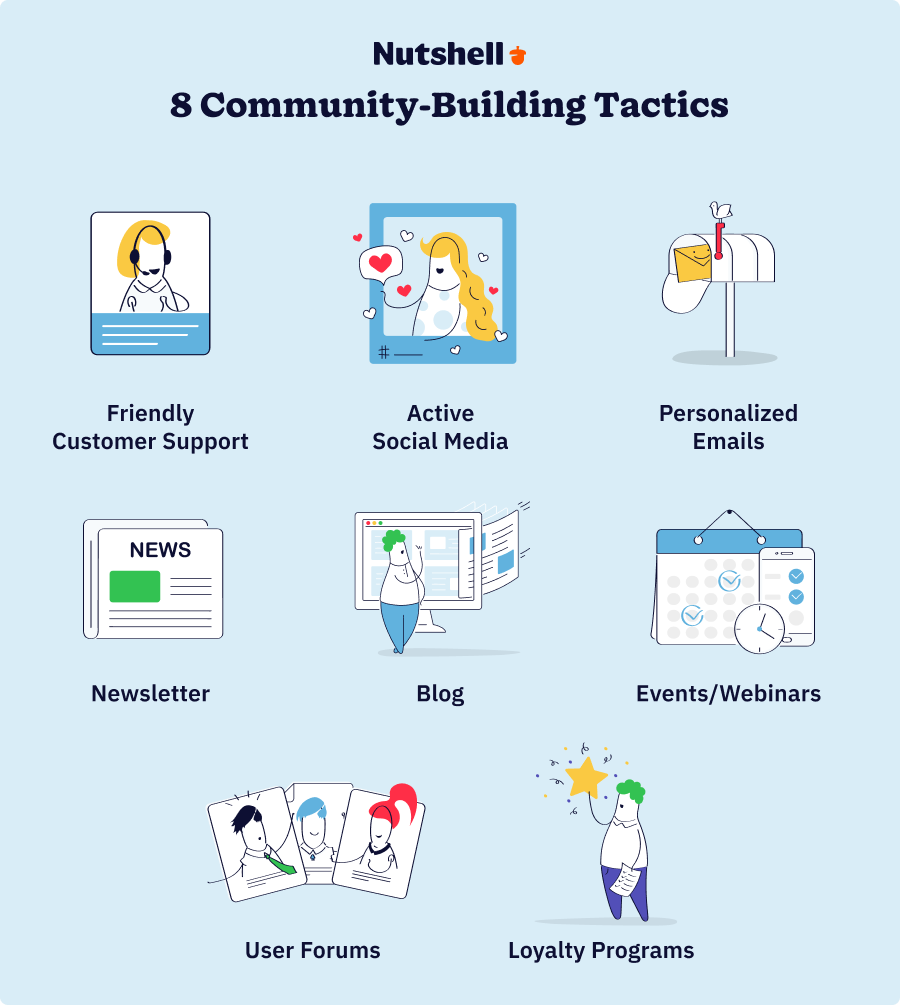
- Create community: Build authentic belonging through friendly customer support, active social media presence, personalized communication, and genuine engagement
- Harness the power of storytelling: Use narratives to connect emotionally with prospects and customers; people remember stories 75% of the time vs. less than 1% for facts and statistics
- Incorporate elements of delight and whimsy: Add personality and fun to your brand; small touches of humor and surprise make your company memorable and human
Seven brand principles you need to know
Principle Primary Focus Key Business Benefit Best For Brand from the inside out Internal alignment & consistency Unified customer experience across all touchpoints Companies building foundational brand identity and culture Make quality a priority Product/service excellence Customer loyalty, premium pricing, reduced churn Organizations with strong products seeking differentiation Be honest and transparent Trust & authenticity B2B buyer confidence, long-term relationships, reduced objections Companies in competitive markets needing trust signals Focus on your ideal customer Marketing positioning & differentiation Avoid commodity positioning, attract ideal customers Businesses wanting to stand out through specificity Create community Customer engagement & loyalty Word-of-mouth advocacy, customer lifetime value Companies seeking to build emotional customer relationships Harness the power of storytelling Emotional connection & memorability Improved recall, emotional resonance, differentiation Brands wanting to stand out through narrative and humanity Incorporate elements of delight and whimsy Brand personality & memorability Positive associations, word-of-mouth, employee pride Organizations wanting to humanize their brand Implementation insight: While each principle is powerful on its own, the greatest results come from implementing all 7 consistently. Companies that master all 7 principles create a competitive moat that’s difficult for competitors to replicate.
1. Brand from the inside out
What it means: Create a foundational brand DNA—a set of 3-5 core values and personality traits—that informs every decision and touchpoint across your organization, from marketing to sales to customer service to product development.
Why it matters: Consumers don’t distinguish between marketing, sales, and customer service—they see them all as aspects of the same brand. A unified internal brand DNA ensures consistency across all customer interactions, which builds trust and differentiation.
According to Millward Brown Chief Global Analyst Nigel Hollis, “The person on the street makes no distinction between marketing, production, sales, or customer service—those distinctions are reserved for the business world alone. To the individual consumer, these are simply different aspects of the same brand.”
Real-world example: When Hap Klopp founded The North Face in 1968, he chose three words to encapsulate the brand’s DNA: disruption, quality, and triple bottom line. He pursued these with “laser-like” focus, incorporating them into every business touchpoint—from product design to customer service to employee culture. Today, The North Face ranks #23 on Prophet’s list of top 50 U.S. brands, with quality being the primary driver of brand strength. This consistency over decades created a brand so strong that it commands premium pricing and customer loyalty.
Implementation tips:
- Define your brand DNA: Work with your leadership team to identify 3-5 core values and personality traits that define your company. Write them down clearly. Examples: “We are transparent, innovative, and customer-obsessed” or “We are reliable, expert, and human-centered.”
- Embed in sales processes: Translate your brand DNA into sales language. How should your sales reps embody these values in discovery calls? In email communication? In negotiations? Create a “brand ambassador playbook” that shows sales reps exactly how to bring your brand to life.
- Standardize in your CRM: Use your CRM (like Nutshell) to standardize brand messaging across email templates, call scripts, sales materials, and follow-up sequences. Every customer touchpoint should reflect your brand DNA.
- Train and reinforce: Conduct quarterly training sessions where sales reps share examples of how they embodied the brand DNA in customer interactions. Celebrate wins. Make brand consistency a core part of performance reviews.
- Measure consistency: Track whether prospects and customers perceive your brand consistently. Use surveys and customer interviews to validate that your brand DNA is actually coming through in customer interactions.
When your sales team consistently embodies your brand DNA, prospects experience a unified, trustworthy company rather than individual salespeople with different approaches. This reduces objections, accelerates trust-building, and increases close rates.
2. Make quality a priority
What it means: Invest in product and service excellence as the non-negotiable foundation of your brand. Quality isn’t a marketing message—it’s a commitment that must be embedded in every aspect of your business.
Why it matters: No amount of fancy visuals, clever taglines, or high-profile influencers can compensate for a sub-par product or service. In an age of near-instant informational access and the wildfire effect of social media, there’s virtually no way to hide poor quality. Customers will find out, and they’ll tell everyone. Conversely, quality builds loyalty and justifies premium pricing. Research shows that quality is the most important factor in brand loyalty for both men and women.
Real-world example: The North Face’s founder Hap Klopp made quality so central to the brand that he offered a lifetime warranty on all North Face products—an extraordinary commitment that demonstrated his conviction. This wasn’t just marketing; it was a business decision that reflected the brand’s core values. Today, that dedication to quality is the primary contributor to The North Face’s brand strength and its ranking as one of the top 50 brands in the U.S.
Implementation tips:
- Audit your product/service: Honestly assess the quality of what you’re selling. Where are the gaps? What would your most critical customer say? Don’t rely on internal opinions—get external feedback through customer interviews and surveys.
- Invest in quality improvements: Allocate budget and resources to close quality gaps. This might mean better materials, improved processes, more rigorous testing, or enhanced customer support. Quality improvements should be a line item in your budget.
- Communicate quality in sales: Train your sales team to talk about quality as a core brand differentiator. Don’t just list features—explain how quality translates to customer success, reduced problems, and better outcomes.
- Back it up with guarantees: Consider what guarantees or warranties you can offer that demonstrate your confidence in quality. This might be a money-back guarantee, extended warranty, or performance guarantee.
- Measure and improve continuously: Track quality metrics (customer satisfaction, defect rates, support tickets, etc.) and share them with your team. Make quality improvement a continuous process, not a one-time initiative.
According to Label Insight’s transparency study, 73% of consumers said they’d be willing to pay more for a product that was completely transparent about quality (ingredients, sourcing, manufacturing, etc.). This demonstrates that quality combined with transparency creates a powerful brand advantage.
When your sales team can confidently talk about quality backed by real evidence (warranties, guarantees, customer testimonials, third-party certifications), it reduces buyer skepticism and accelerates the sales process. Quality becomes a competitive moat that justifies premium pricing.
3. Be honest and transparent
What it means: Foster a company culture of transparency and honesty. Communicate openly about what you do, how you do it, what you’re good at, and where you have limitations. Base your brand messaging on facts, not hype.
Why it matters: Trust is foundational to a strong brand. In an age of unprecedented informational access, it’s easier than ever for a consumer to call your bluff. B2B buyers are particularly skeptical in 2025—they’ve been burned by overpromising vendors and are demanding proof before they engage. According to McKinsey’s study of B2B business practices, purchasers base their buying decisions primarily on two things: a company’s honesty and its expertise. Yet interestingly, most companies aren’t focusing their brand messaging on either of these areas.
Real-world example: According to a survey by Label Insight, 73% of consumers said they’d be willing to pay more for a product that was completely transparent (ingredients, sourcing, etc.). This demonstrates that transparency isn’t just nice to have—it’s a competitive advantage that customers will pay for. In B2B, the advantage is even greater: transparent companies build trust faster, reduce sales cycle length, and command premium pricing.
Implementation tips:
- Audit your messaging: Review your website, sales materials, and pitch decks. Are you making claims you can back up with data? Are you being honest about limitations? Remove hype and replace it with facts.
- Create fact-based sales materials: Develop case studies, data sheets, and comparison documents that are factually accurate and transparent about what your solution does and doesn’t do. Include real customer results with permission.
- Train sales reps on transparency: Teach your sales team to be honest about fit. If your solution isn’t right for a prospect, say so. This builds credibility and often leads to referrals. Sales reps who are honest about limitations actually close more deals because prospects trust them.
- Share your methodology: Explain how you arrived at your claims. If you say “our customers see 40% faster sales cycles,” explain the methodology, sample size, and conditions. Transparency about methodology builds credibility.
- Address objections directly: Don’t hide from common objections or concerns. Address them head-on in your marketing and sales conversations. This demonstrates confidence and builds trust.
According to G2’s 2025 Buyer Behavior Report, 78% of buyers had heard of the product they purchased before they started their research process. This means your brand reputation (built on honesty and transparency) is doing the selling before your sales team even gets involved. Buyers are researching your company’s reputation, reading reviews, and checking references. Transparency ensures they find what they’re looking for.
Sales reps who are transparent and honest close deals faster, face fewer objections, and build stronger customer relationships. Transparency also reduces buyer’s remorse and increases customer lifetime value because customers know exactly what they’re getting.
DOWNLOAD
Want to be a better leader?
The Sales Manager’s Survival Guide includes 70+ expert tips on hiring, coaching, and motivating your sales team. Download it today!

4. Focus on your ideal customer
What it means: Define your unique value to a specific market rather than trying to appeal to “everyone.” Identify your ideal customer profile (ICP) and design your brand, messaging, and sales approach specifically for them.
Why it matters: “You can’t please everyone.” This maxim is critical to successful branding. If your product is no different from your competition—or if your target market is “everybody”—then you’re a commodity and your company is just a vendor. Branding expert David Tyreman likes to quip: “Vending is for machines.” Successful branding is all about differentiation. When you focus on a specific market and define what makes you uniquely valuable to that market, you attract a strong and loyal customer base willing to pay premium prices.
Real-world example: Wheeler’s Produce, a 100+ year family farm in Queensland, Australia, was facing extinction in 2023 when an oversupply of capsicums crashed prices. Instead of competing on price with commodity producers, they rebranded to focus specifically on premium capsicum buyers who valued quality and heritage. They repositioned their product as “Wheeler’s Warlocks” and targeted high-end grocery stores and restaurants. The result? A 33.68% price premium and increased demand across the Eastern Seaboard. By focusing on their ideal customer (premium buyers), they transformed from a commodity producer to a premium brand.
Implementation tips:
- Define your ideal customer profile (ICP): Create a detailed profile of your perfect customer. Include company size, industry, revenue, pain points, buying process, decision-makers, and budget. Be specific. “Mid-market B2B SaaS companies with 50-500 employees in the professional services industry” is better than “companies that need CRM software.”
- Research your ICP deeply: Interview your best customers. What problems were they trying to solve? Why did they choose you? What would have made them choose a competitor? Use this research to refine your ICP.
- Design your brand for your ICP: Your brand messaging, visual identity, tone of voice, and sales approach should all be designed specifically for your ICP. If your ICP values innovation, your brand should communicate innovation. If they value reliability, communicate that.
- Focus your sales efforts: Concentrate your sales team’s efforts on your ICP. Don’t waste time chasing prospects outside your ICP. This focus allows you to become the expert in serving that specific market.
- Measure fit: Track which customers are in your ICP and which aren’t. Measure the difference in sales cycle length, deal size, and customer lifetime value between ICP customers and non-ICP customers. Use this data to refine your ICP and focus even more.
According to research from Philomath Research analyzing 150+ B2B market research projects, satisfied B2B customers are 4x more likely to refer your brand and 3x more likely to upgrade. This demonstrates that focusing on the right customers (your ICP) creates a virtuous cycle of referrals and expansion revenue.
When your sales team focuses on your ICP, they become experts in that market. They understand the specific pain points, buying process, and decision criteria. This expertise translates to shorter sales cycles, higher close rates, and larger deal sizes. Sales reps also experience less rejection because they’re talking to prospects who are actually a good fit.
5. Create community
What it means: Build authentic feelings of belonging among your customers and employees. Create spaces and experiences where people feel connected to your brand and to each other.
Why it matters: Having a sense of belonging is a fundamental human desire. To build a successful brand, a company should create a feeling of community for its customers (and employees too!). Community creates loyalty, advocacy, and word-of-mouth marketing. Customers who feel part of a community are more likely to stay longer, spend more, and refer others.
Real-world example: Zappos is famous for building community through its “family spirit” core value. They invest heavily in customer support, maintain an active social media presence, send personalized emails, and create genuine connections with customers. The result? Zappos has built one of the most loyal customer bases in retail, with customers who actively advocate for the brand and refer others. Zappos’ community-building approach has become a case study in brand loyalty.
Implementation tips:
- Invest in customer support: Make customer support friendly, responsive, and genuinely helpful. Train your support team to see themselves as community builders, not just problem-solvers. Use your CRM to personalize support interactions.
- Build an active social media presence: Engage authentically on social media platforms where your customers spend time. Share insights, ask questions, respond to comments, and build conversations—not just broadcast messages. According to 2025 data, 78% of consumers trust brands more when they have an active social media presence.
- Create personalized communication: Use email, newsletters, and in-app messaging to communicate with customers in a personalized way. Reference their specific use cases, celebrate their wins, and provide value beyond your product.
- Host community events: Consider webinars, user conferences, online forums, or local meetups where customers can connect with each other and your team. These events build relationships and create a sense of belonging.
- Empower customer advocates: Identify your most passionate customers and give them a platform to share their stories. Create a customer advisory board, feature customer stories on your website, or invite them to speak at events.
According to the 2025 Employee Advocacy Benchmark Report surveying 250+ program leaders from Fortune 500 companies, employee advocacy (where employees share company content on social media) generates 561% more reach than the same messages shared by the brand’s official channels. This demonstrates that community-building through authentic human connections is exponentially more powerful than corporate messaging.
Customers who feel part of a community are more likely to renew, expand, and refer. They’re also more forgiving when problems occur because they feel invested in your success. Community also reduces customer acquisition cost because referrals are cheaper than paid acquisition.
6. Harness the power of storytelling
What it means: Use narratives to connect emotionally with prospects and customers. Share your company’s origin story, describe how your solution solves real customer problems, and celebrate customer success stories.
Why it matters: People love stories. They’re memorable, emotionally resonant, and persuasive in ways that facts and statistics alone can never be. According to research cited by sales trainer Ryan Dohrn, people remember stories 75% of the time. People remember facts and statistics less than 1% of the time. This massive difference explains why storytelling is one of the most powerful branding tools available.
Storytelling is also how you humanize your company. In a world of corporate messaging and marketing hype, authentic stories create emotional connections that differentiate your brand and build loyalty.
Real-world example: The shift in personal branding for sales professionals in 2024-2025 demonstrates the power of storytelling. Sales professionals who focus on sharing problem-solving stories (not just personality stories) are seeing direct revenue impact.
According to LinkedIn insights from sales professionals like Yashvi Sharma at OpenText, the most successful personal brands focus on “problems, not only personalities; solutions, not only stories; results, not relatability.” This demonstrates that storytelling works best when it’s tied to real business outcomes.
Implementation tips:
- Craft your company origin story: Why did you start this company? What problem were you trying to solve? What values drove you? Share this story in your marketing, on your website, and in sales conversations. Make it authentic and human.
- Develop customer success stories: Interview your best customers about their challenges, how they solved them with your solution, and the results they achieved. Turn these into case studies, video testimonials, or written stories. Include specific metrics and quotes.
- Train sales reps to tell stories: Teach your sales team to use storytelling in discovery calls and presentations. Instead of listing features, tell stories about how similar customers solved similar problems. Stories are more persuasive than feature lists.
- Share employee stories: Highlight your team members’ backgrounds, expertise, and passion. Share stories about how your team members came to work at your company and what drives them. This humanizes your brand.
- Use multiple formats: Tell stories through blog posts, videos, podcasts, social media, webinars, and in-person events. Different formats reach different audiences and reinforce your message.
According to HubSpot research, storytelling increases perceived authority and trust. Brands that use storytelling effectively see higher engagement, more shares, and better conversion rates. In fact, content with clear narratives gets shared 2x more than content without stories.
Sales reps who tell stories close deals faster and face fewer objections. Stories make your solution tangible and relatable. They help prospects envision themselves as successful customers. Stories also reduce buyer’s remorse because customers remember the story of why they chose you.
7. Incorporate elements of delight and whimsy
What it means: Add personality and fun to your brand. Include small touches of humor, surprise, and delight that make your company memorable and human.
Why it matters: Don’t underestimate the impact a bit of fun can have on your customers. In a world of corporate formality and serious business messaging, brands that inject personality and humor stand out. Delight creates positive emotional associations with your brand. It makes your company memorable. It gives people something to talk about and share.
Real-world example: Branding expert David Tyreman, when running his agency Propaganda, created custom audio invoice cards. When clients opened their invoices, they heard the booming voice of Igor (a Propaganda employee) saying in his thick Ukrainian accent: “You must pay this bill today!” Clients loved it—and they paid their invoices much more quickly. This small touch of whimsy created a memorable brand experience that actually improved business outcomes.
Another example: Zappos created the #imnotabox campaign, printing the interiors of select boxes with templates for cardboard crafts (iPhone stands, 3D llamas, planters). Google’s doodles—custom illustrations on special dates and events—are another great example of seamlessly incorporating whimsy into a brand. Here at Nutshell, our engineers created a hidden squirrel in our iOS app that appears when you shake your phone—a bit of silliness that customers and employees love.
Implementation tips:
- Identify your brand personality: What’s your company’s personality? Are you playful, witty, irreverent, or whimsical? Define this clearly so your team knows what kind of delight fits your brand.
- Find small opportunities for surprise: Look for moments in the customer journey where you can add a small touch of delight. This might be in packaging, email signatures, customer support interactions, or product features.
- Train your team: Make sure your entire team (especially customer-facing roles) understands your brand personality and feels empowered to add small touches of delight. Give them examples and guidelines.
- Don’t force it: Delight should feel authentic, not forced. If humor doesn’t fit your brand, don’t force it. The goal is to add personality in a way that feels genuine.
- Measure the impact: Track whether customers remember and talk about your delightful touches. Use customer feedback and social media mentions to understand what resonates.
According to research on brand memorability, brands that incorporate personality and humor are 2x more likely to be remembered and recommended than brands that don’t. This demonstrates that delight isn’t just nice to have—it’s a competitive advantage.
Sales reps who bring personality and humor to their interactions build stronger relationships with prospects. Delight creates positive emotional associations that make prospects more likely to choose you. It also makes your sales team more enjoyable to work with, which improves retention and morale.
Branding for sales: The bottom line
If you want to improve your company’s performance and make your sales team’s job easier, you need to consider these branding principles and invest in your brand. We’ve given you seven brand principles to establish successful branding—develop a brand DNA, prioritize quality, be honest and transparent, focus on your ideal customer, create community, harness the power of storytelling, and have some fun. The first principle—creating your brand’s DNA—is the most critical since it provides the map that will inform all of your company’s decisions and help your brand grow naturally from the inside out.
“Once you figure out the DNA,” says Klopp, “then you just repeat it and consistently put that out there [and] people who like what you’re doing will collect to you.” Consistency is key to successful branding, and having a brand DNA—a guiding blueprint—ensures you will achieve it.
As your branding replicates across your company’s various activities, it will continue to strengthen. “Brands are like coral,” Klopp likes to say. “They grow over time. You don’t see them growing. They become very complex. If they’re really developed and really consistent, at some point you reach critical mass: they’re so unique you have a monopoly and nobody can compete with you.”
Frequently asked questions about branding
-
How long does it take to see results from branding efforts in sales?
Expect to see early signals within 30 days (website traffic, engagement), clear trends by 90 days (lead quality, sales conversations), and full impact after 12 months. Most B2B companies see ROI within 6-12 months. Remember: only 5% of buyers are ready to buy now—branding builds trust with the other 95% for future sales. This is why branding is a long-term investment, not a short-term tactic.
-
How can CRM tools help maintain brand consistency across sales teams?
CRM tools like Nutshell centralize your brand messaging, email templates, and sales materials so every rep delivers a consistent experience. You can customize forms, landing pages, and email sequences with your branding, automate follow-ups that reflect your voice, and track which branded touchpoints drive conversions—ensuring your team stays on-brand at scale. A good CRM also allows you to standardize call scripts, discovery questions, and proposal templates so every customer interaction reflects your brand DNA.
-
What’s the difference between personal branding and company branding for sales reps?
Personal branding is your individual reputation—your expertise, values, and unique story shared through LinkedIn, speaking, and networking. Company branding is your organization’s identity, values, and promise. Both must align: your personal brand should amplify your company’s brand. Think of sales reps as brand ambassadors who bring the company’s story to life through authentic relationships.
-
How do you measure if branding is actually improving sales performance?
Track these key metrics: brand recall (do prospects remember you?), sales cycle length (are deals closing faster?), lead quality (are inbound leads better qualified?), conversion rates, customer lifetime value, and direct/branded search traffic. Use your CRM to monitor how brand-influenced leads perform compared to cold outreach, and survey customers about brand perception before and after initiatives.
-
Can small sales teams compete with established brands?
Absolutely. Small teams win through focus, authenticity, and consistency. Target a specific niche (principle #4), build genuine community (principle #5), and use storytelling to connect emotionally (principle #6). Tools like Nutshell level the playing field by automating brand-consistent outreach and helping you punch above your weight. Remember: 77% of brands are forgettable—you don’t need a big budget, just a clear identity and consistent execution.
-
How do you build a personal brand as a sales rep while representing your company brand?
Personal branding and company branding should work together, not against each other. Your personal brand should amplify your company’s brand by: (1) sharing company insights and thought leadership on LinkedIn, (2) demonstrating expertise in your industry, (3) building authentic relationships with prospects, and (4) positioning yourself as a trusted advisor, not just a salesperson. Your personal brand establishes credibility that makes your company’s brand more trustworthy. Think of it as a multiplier effect: strong personal brands + strong company brand = exponentially more trust and influence. According to 2025 data, sales teams using their social networks can outsell peers by up to 76%.
-
What’s the difference between branding and marketing?
Branding is about identity, values, and long-term perception. Marketing is about promotion and driving immediate action. Branding asks “Who are we?” Marketing asks “How do we tell people about what we do?” Successful sales organizations do both: they build a strong brand (identity) and use marketing to communicate that brand to prospects and customers. Think of branding as the foundation and marketing as the megaphone.
-
How does branding impact sales cycle length?
Strong branding can significantly reduce sales cycle length because: (1) prospects recognize and trust your brand before sales conversations begin, (2) brand awareness means less time spent on education and trust-building, (3) consistent messaging reduces objections and confusion, and (4) community and storytelling create emotional connections that accelerate decisions. Research shows that 78% of buyers have heard of the product they purchase before they start their research process. Strong branding ensures you’re top-of-mind when they begin evaluating solutions, which shortens the sales cycle.
-
Can you rebrand if your current brand isn’t working?
Yes, but rebranding is complex and requires careful planning. Before rebranding, ask: (1) Is the problem with the brand itself, or with how it’s being communicated? (2) Do you have the resources to maintain consistency during the transition? (3) Will your existing customers understand and accept the new brand? Often, the issue isn’t the brand but the execution. Before rebranding, try strengthening your current brand through better consistency, clearer messaging, and stronger storytelling. A rebrand should be a last resort, not a first response.
-
How do you ensure your sales team actually embodies your brand in customer interactions?
Make branding a core part of your sales culture and processes: (1) Define your brand DNA clearly and share it with your team, (2) Create a “brand ambassador playbook” showing how to embody brand values in sales conversations, (3) Use your CRM to standardize brand messaging across all customer touchpoints, (4) Conduct regular training on brand embodiment, (5) Celebrate examples of great brand representation, (6) Include brand consistency in performance reviews, and (7) Measure brand perception through customer surveys. When your team sees that brand consistency is valued and rewarded, they’ll prioritize it.
DOWNLOADA foolproof roadmap for outbound sales.
Prospects are far more likely to buy when they’ve heard of you before. This step-by-step outbound campaign template shows you how to get on your contacts’ radars before you start dialing.
 BACK TO TOP
 Written by
Will Gordon Sr. Director of MarketingEdited by
Andy Fowler Co-FounderReady to try
Nutshell for Free?Thank you! Your submission has been received!Oops! Something went wrong while submitting the form.




Highly Effective Strategies for Elevating Sales Team Performance
Published on: November 10, 2022Establishing a System for CRM Data Entry and Management
Published on: April 11, 2023Introducing Nutshell Forms Spam Prevention
Published on: April 22, 2024Join 30,000+ other sales and marketing professionals. Subscribe to our Sell to Win newsletter!